BJJ blue belt test: a free practice exam
20 questions. Free, no sign-up.

Unofficial practice exam. Only your professor can promote you.
This is an unofficial BJJ blue belt practice exam: 20 questions, and 18 of them show you something. It is organised like a grading: takedowns, guard passes, guard sweeps, submissions from guard, side control, mount, and back and turtle. You see a position or a move as an animation, a clip from our fundamentals course or a technique image, and you name it, pick the moves that start from there or say where it ends. Two questions cover rules, scoring and safety. There is no official blue belt test: the IBJJF sets a minimum age of 16, and your professor decides when you are ready.
 BJJ blue belt practice exam
Leave the exam? Your answers so far will be lost.
Unofficial practice exam
BJJ blue belt practice exam
20 questions across 8 areas. You answer each one once: no going back.
- Takedowns and throws
- Guard passes
- Guard sweeps
- Submissions from guard
- Side control
- Mount
- Back and turtle
- Rules and safety
Unofficial practice exam. Only your professor can promote you.
Unofficial practice exam
20 questions, one at a time. You see the answer and why after each one. Nothing is saved and there is no sign-up.
Unofficial practice exam. Only your professor can promote you.
Animations from JitsAI’s card game (GrappleMap, public domain). No-gi only.
Rules and safety
From 1 January 2027, can an adult white belt use a straight foot lock at an IBJJF event?
From 1 January 2027 the straight foot lock is illegal for white belts and for all 16 and 17 year olds.
Rules and safety
A white belt jumps to closed guard on a standing opponent at an IBJJF event in 2027. What happens?
From 2027 jumping guard is a severe foul for white belts of every age and for all divisions up to 15: disqualification on the spot.
Rules and safety
Which of these is illegal for blue belts at IBJJF events?
The knee bar, toe hold, calf slicer and biceps slicer are illegal for blue and purple belts. The other three are on the list only for under-16s.
Rules and safety
Who may use a heel hook at IBJJF events?
The heel hook is illegal in every column of the table except adult brown and black belts in no-gi.
Rules and safety
Both athletes pull guard at the same time. Under the 2027 rules, how long before the referee stops the match if nobody comes on top or scores?
The referee counts 20 seconds, then stops the match, penalises both and restarts standing, even with a submission on.
Rules and safety
What is the IBJJF minimum age for a blue belt?
The IBJJF graduation system allows the blue belt from age 16.
Rules and safety
Under IBJJF minimums, how long does an adult spend at blue belt before purple?
At least two years at blue belt before purple.
Rules and safety
Which of these is illegal at every belt and age at IBJJF events?
The slam is in every column of the illegal moves table, like the spinal lock and the scissor takedown.
Rules and safety
Who decides when you get your blue belt?
Your professor promotes you. The IBJJF sets only the minimums, such as age 16 for blue belt.
Rules and safety
Is the wrist lock legal for white belts at IBJJF events?
The wrist lock is illegal for the under-16 divisions, for 16 and 17 year olds and for white belts.
Rules and safety
How many points is the mount worth under IBJJF rules?
Mount and back control are worth 4 points.
Rules and safety
How many points for a sweep?
A takedown, a sweep or knee on belly is worth 2 points.
Rules and safety
How many points for back control?
Back control scores 4, the same as mount.
Rules and safety
How long must you hold a scoring position before the points are given?
IBJJF points are for positions held for 3 seconds.
Guard sweeps
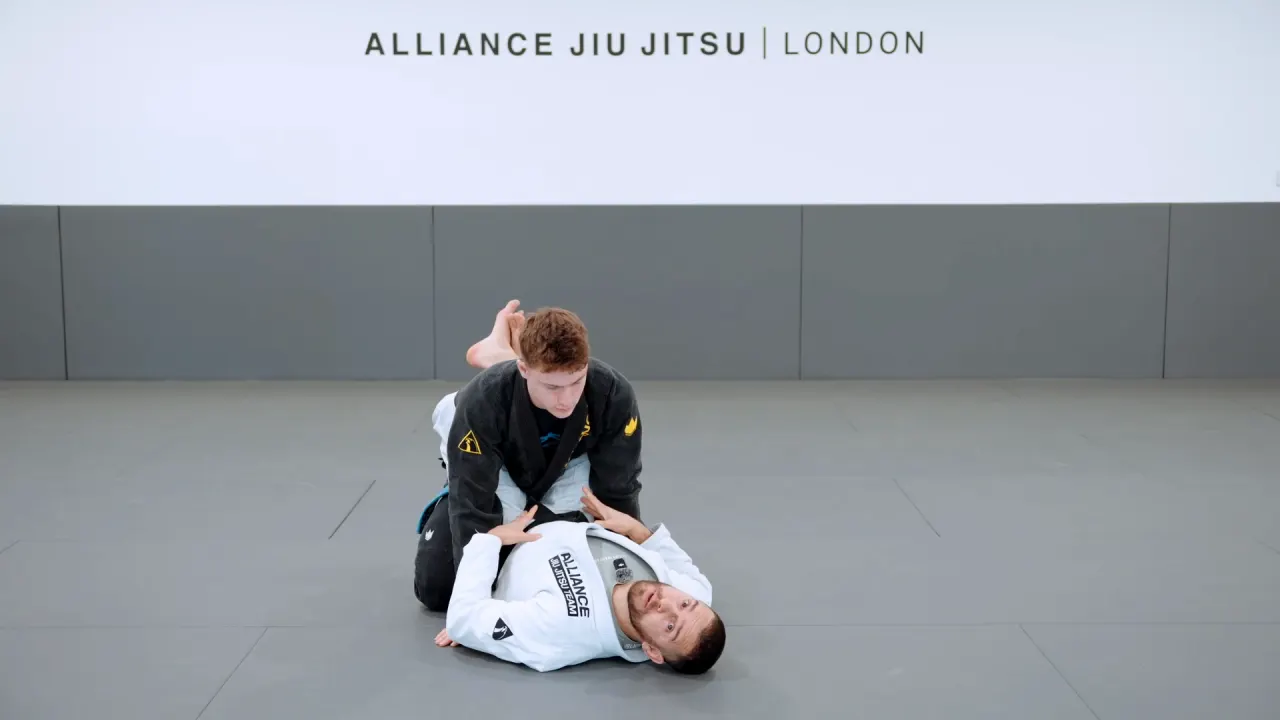
Clip from JitsAI’s fundamentals course with Henrique Rezende.
Watch the clip. What is the player on the bottom using?
Closed guard: on your back with your legs locked around the opponent’s waist.
Guard sweeps
You are the fighter in white.
What is a sweep?
A sweep reverses the position from underneath, usually from guard, so you end up on top.
Guard passes
You are the fighter in white.
What does “passing the guard” mean?
Guard passing is getting past the legs to a pinning position such as side control or mount.
Back and turtle
You are the fighter in white.
Which position is considered the most dominant in the sport?
Back control: chest on their back, hooks in, both arms free to attack the neck.
Takedowns and throws
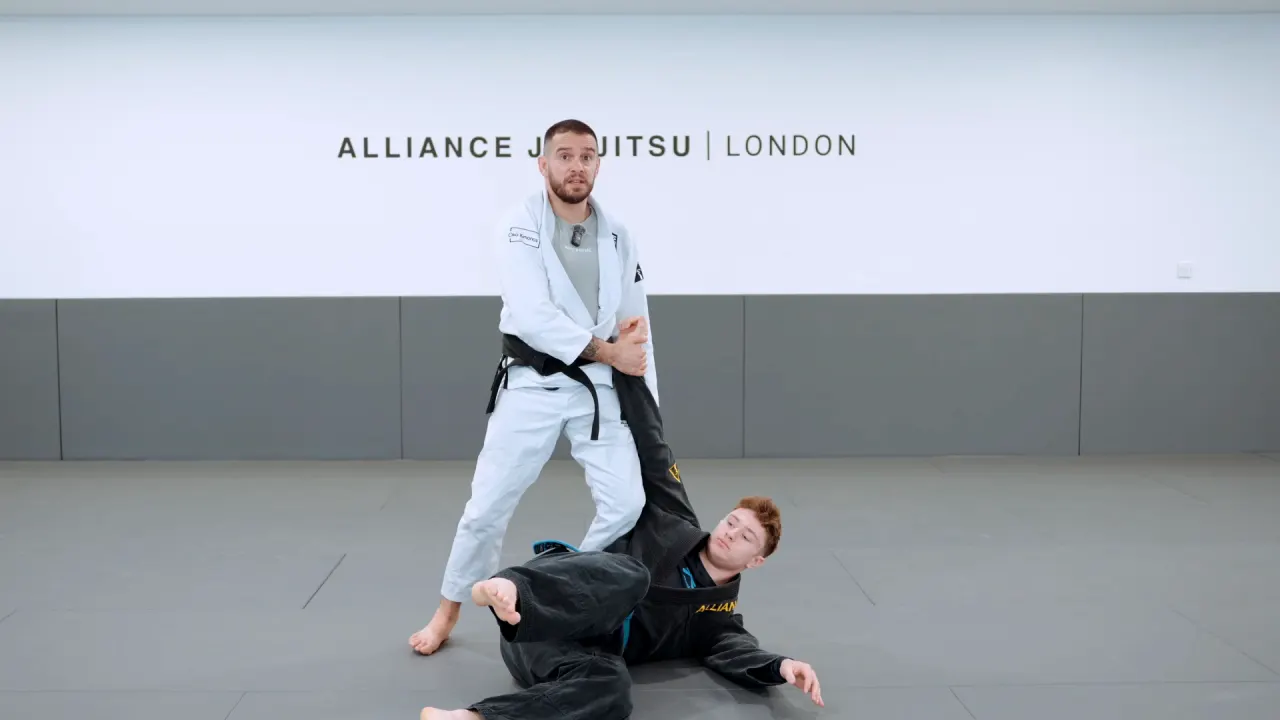
Clip from JitsAI’s fundamentals course with Henrique Rezende.
This throw is osoto gari. If you land it and hold a controlled top position, what does it score under IBJJF rules?
Any takedown that ends in a controlled position scores 2 points.
Mount
You are the fighter in white.
What is a bridge (upa) for?
A bridge arches your hips off the mat to create space to escape, or to power a sweep.
Side control
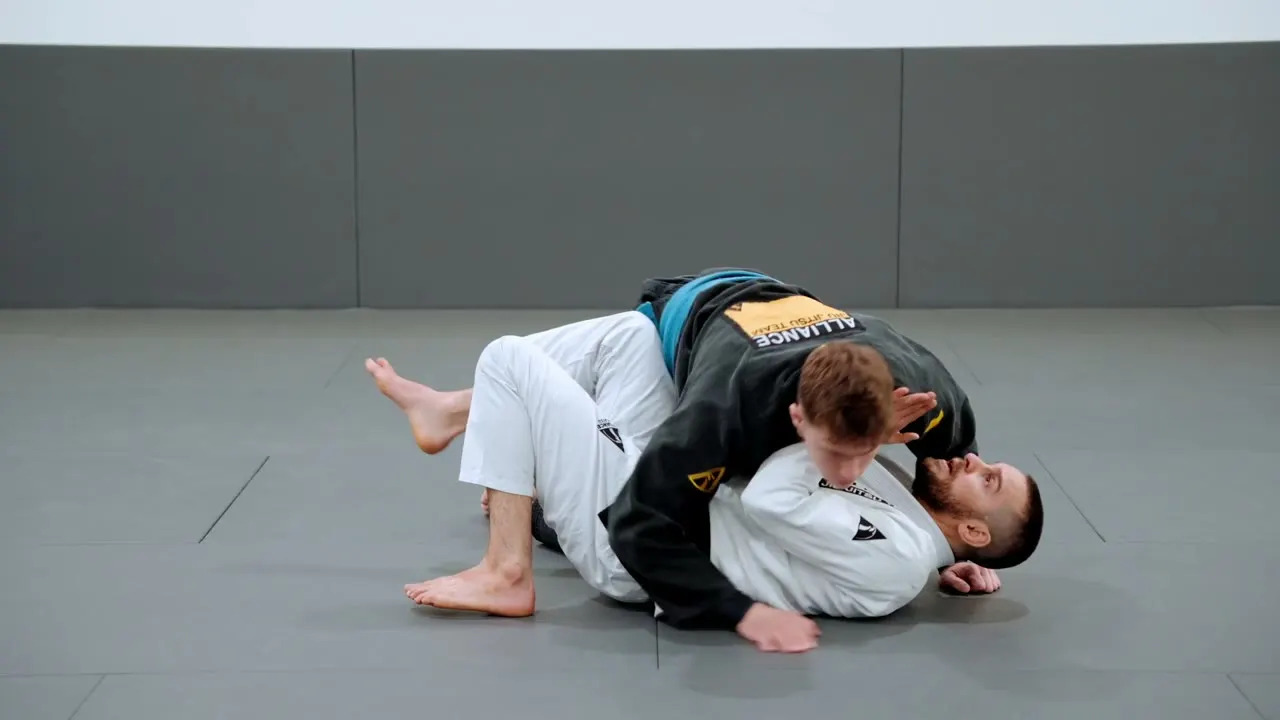
Clip from JitsAI’s fundamentals course with Henrique Rezende.
Escaping side control: what comes first?
Frame with both forearms against their hip and chest, elbows tucked, so there is always a gap to work with.
Side control
Clip from JitsAI’s fundamentals course with Henrique Rezende.
In the side control escape, what does the bridge do?
A bridge alone will not get you out, but it opens the gap a hip escape needs.
Mount
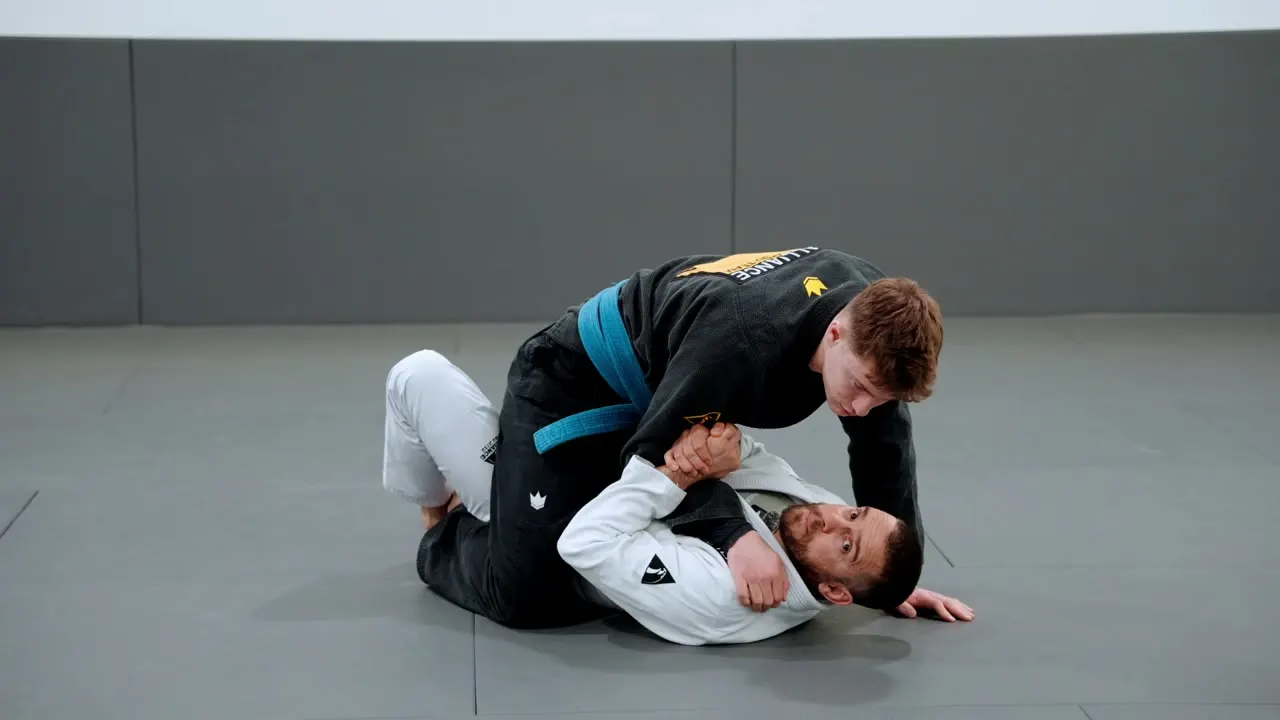
Clip from JitsAI’s fundamentals course with Henrique Rezende.
Elbow escape from mount: what must you do before anything else?
There is no elbow escape with open elbows: a heavier opponent gets an underhook and shuts it down.
Mount
Clip from JitsAI’s fundamentals course with Henrique Rezende.
In the mount escape, why bridge slightly before you push their leg?
Bridging first stops you leaving a gap under your armpit while you push.
Side control
Clip from JitsAI’s fundamentals course with Henrique Rezende.
Side control escape: as you come down from the bridge, what do you do?
Hip escape: slide your hips away and bring your top knee in next to your opponent’s knee.
Submissions from guard
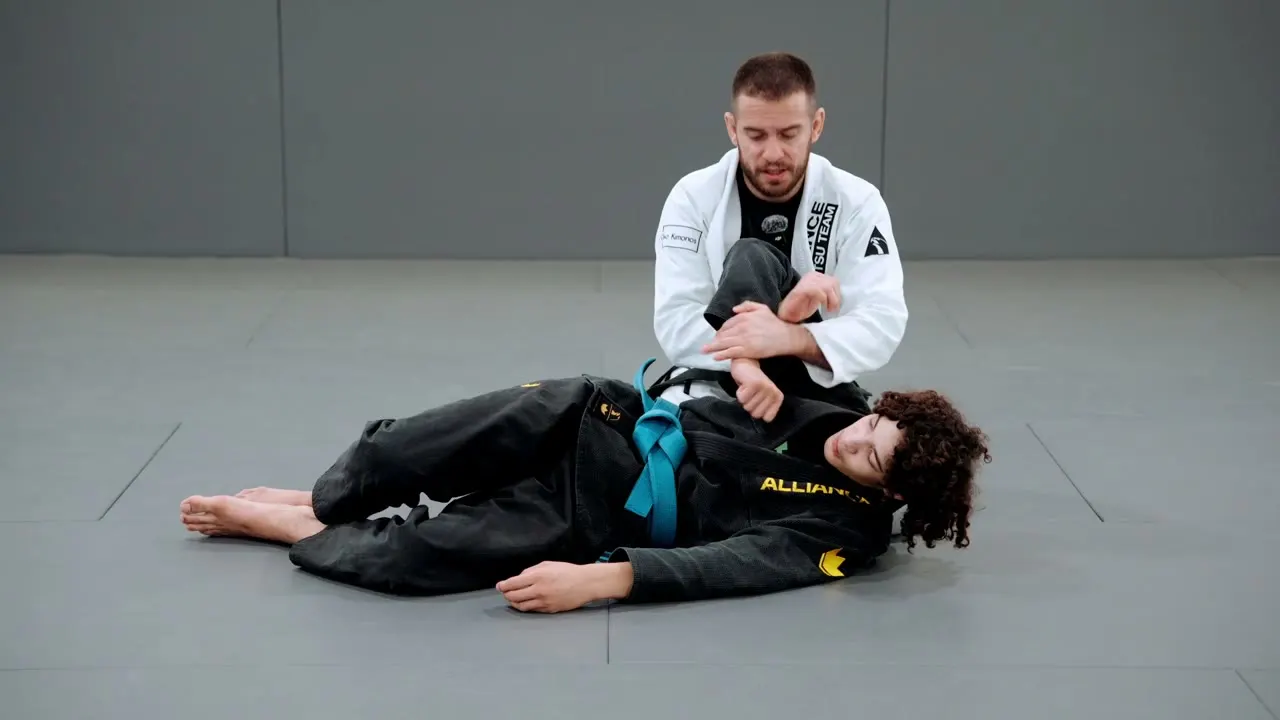
Clip from JitsAI’s fundamentals course with Henrique Rezende.
Watch the clip. Which joint does the kimura attack?
The kimura is a shoulder lock.
Submissions from guard
You are the fighter in white.
What kind of submission is an armbar?
An armbar straightens the elbow past the point it can go, with your hips as the pivot.
Submissions from guard
You are the fighter in white.
The triangle choke from guard is:
Your legs trap the head and one arm, so your thigh presses one side of the neck and their shoulder the other.
Rules and safety
The video plays once you have answered.
A neck crank is:
It bends the neck further than it is built to go instead of choking, and IBJJF bans the spinal lock in every division.
Submissions from guard
You are the fighter in white.
The omoplata is best described as:
You swing a leg over their shoulder and trap the bent arm against your hip: the kimura’s twist, done with your legs.
Back and turtle
You are the fighter in white.
The rear naked choke is:
It is a blood choke, not an air choke.
Side control
The video plays once you have answered.
How does the americana relate to the kimura?
The americana is the kimura grip turned the other way: it twists the shoulder back.
Rules and safety
A submission is locked on you in training. What should you do?
Tap early, and finish your own submissions slowly in training.
Takedowns and throws
Clip from JitsAI’s fundamentals course with Henrique Rezende.
Watch the clip. Which throw is this?
Osoto gari, the judo outer reap.
Side control
Clip from JitsAI’s fundamentals course with Henrique Rezende.
Watch the clip. Which submission is he setting up from side control?
The kimura, here from side control. It is a shoulder lock.
Guard sweeps
Clip from JitsAI’s fundamentals course with Henrique Rezende.
Watch the clip. From the guard he is using, which of these is a sweep?
He is in closed guard. The scissor sweep puts you on top; the other three are submissions from the same guard.
Mount
Clip from JitsAI’s fundamentals course with Henrique Rezende.
Watch the clip. The player on top holds this position for 3 seconds. What does it score under IBJJF rules?
This is the mount, and the mount is worth 4 points.
Side control
Clip from JitsAI’s fundamentals course with Henrique Rezende.
Watch the clip. The player on top got here by passing the guard. What did the pass score under IBJJF rules?
This is side control, reached by passing the guard, and a guard pass is worth 3 points.
Takedowns and throws
You are the fighter in white.
You are the fighter in white. What position is this?
This is: Standing.
Guard passes
You are the fighter in white.
You are the fighter in white. What position is this?
This is: Closed guard, on top.
Guard sweeps
You are the fighter in white.
You are the fighter in white. What position is this?
This is: Closed guard, on the bottom.
Guard passes
You are the fighter in white.
You are the fighter in white. What position is this?
This is: Open guard, on top.
Guard sweeps
You are the fighter in white.
You are the fighter in white. What position is this?
This is: Open guard, on the bottom.
Guard passes
You are the fighter in white.
You are the fighter in white. What position is this?
This is: Half guard, on top.
Guard sweeps
You are the fighter in white.
You are the fighter in white. What position is this?
This is: Half guard, on the bottom.
Guard passes
You are the fighter in white.
You are the fighter in white. What position is this?
This is: Leg entanglement, on top.
Guard sweeps
You are the fighter in white.
You are the fighter in white. What position is this?
This is: Leg entanglement, on the bottom.
Side control
You are the fighter in white.
You are the fighter in white. What position is this?
This is: Side control, on top.
Side control
You are the fighter in white.
You are the fighter in white. What position is this?
This is: Side control, on the bottom.
Mount
You are the fighter in white.
You are the fighter in white. What position is this?
This is: Mount, on top.
Mount
You are the fighter in white.
You are the fighter in white. What position is this?
This is: Mount, on the bottom.
Back and turtle
You are the fighter in white.
You are the fighter in white. What position is this?
This is: Back control, on top.
Back and turtle
You are the fighter in white.
You are the fighter in white. What position is this?
This is: Back control, on the bottom.
Back and turtle
You are the fighter in white.
You are the fighter in white. What position is this?
This is: Turtle, on top.
Back and turtle
You are the fighter in white.
You are the fighter in white. What position is this?
This is: Turtle, on the bottom.
Takedowns and throws
You are the fighter in white.
You are in white (standing). Pick the 4 takedowns or throws from here.
Ankle Pick: It takes you to: open guard, on top. Front Headlock (from Snapdown): It takes you to: turtle, on top. Double Leg Takedown: It takes you to: half guard, on top. Snapdown: It takes you to: turtle, on top.
Guard passes
You are the fighter in white.
You are in white (closed guard, on top). Pick the 2 ways to open the guard from here.
Knee-in-Tailbone Break: It takes you to: open guard, on top. Standing Guard Break (Closed Guard): It takes you to: open guard, on top.
Submissions from guard
You are the fighter in white.
You are in white (closed guard, on the bottom). Pick the 4 submissions from here.
Triangle Choke: It is a submission. Guillotine Choke: It is a submission. Kimura: It is a submission. Armbar: It is a submission.
Guard sweeps
You are the fighter in white.
You are in white (closed guard, on the bottom). Pick the 3 sweeps from here.
Hip Bump Sweep: It takes you to: half guard, on top. Flower Sweep (Pendulum): It takes you to: half guard, on top. Scissor Sweep: It takes you to: half guard, on top.
Guard passes
You are the fighter in white.
You are in white (open guard, on top). Pick the 4 guard passes from here.
Stack Pass: It takes you to: side control, on top. Torreando (Bullfighter) Pass: It takes you to: side control, on top. Smash Pass: It takes you to: side control, on top. Knee Cut (Knee Slice): It takes you to: side control, on top.
Guard sweeps
You are the fighter in white.
You are in white (open guard, on the bottom). Pick the 3 sweeps from here.
Single Leg Takedown: It takes you to: open guard, on top. Ankle Pick: It takes you to: open guard, on top. Butterfly Hook Sweep: It takes you to: side control, on top.
Submissions from guard
You are the fighter in white.
You are in white (open guard, on the bottom). Pick the 3 submissions from here.
Guillotine Choke: It is a submission. Triangle Choke: It is a submission. Armbar: It is a submission.
Guard passes
You are the fighter in white.
You are in white (half guard, on top). Pick the 2 guard passes from here.
Smash Pass: It takes you to: side control, on top. Knee Cut (Knee Slice): It takes you to: side control, on top.
Guard sweeps
You are the fighter in white.
You are in white (half guard, on the bottom). Pick the 3 sweeps from here.
Butterfly Hook Sweep: It takes you to: side control, on top. Old School Sweep: It takes you to: side control, on top. Single Leg Takedown: It takes you to: open guard, on top.
Side control
You are the fighter in white.
You are in white (side control, on top). Pick the 3 submissions from here.
Armbar: It is a submission. Kimura: It is a submission. Americana: It is a submission.
Side control
You are the fighter in white.
You are in white (side control, on the bottom). Pick the 4 escapes from here.
Bridge and Roll (Upa): It takes you to: turtle, on the bottom. Technical Stand-Up: It takes you to: standing. Underhook Escape (Side Control): It takes you to: turtle, on the bottom. Elbow Escape: It takes you to: open guard, on the bottom.
Mount
You are the fighter in white.
You are in white (mount, on top). Pick the 3 submissions from here.
Armbar: It is a submission. Americana: It is a submission. Triangle Choke: It is a submission.
Mount
You are the fighter in white.
You are in white (mount, on the bottom). Pick the 2 escapes from here.
Elbow Escape: It takes you to: half guard, on the bottom. Bridge and Roll (Upa): It takes you to: closed guard, on top.
Back and turtle
You are the fighter in white.
You are in white (back control, on top). Pick the 2 submissions from here.
Armbar: It is a submission. Rear Naked Choke (Mata Leao): It is a submission.
Back and turtle
You are the fighter in white.
You are in white (turtle, on the bottom). Pick the 4 escapes from here.
Sit-Out Turn In: It takes you to: open guard, on the bottom. Single Leg Takedown: It takes you to: open guard, on top. Double Leg Takedown: It takes you to: half guard, on top. Technical Stand-Up: It takes you to: standing.
Takedowns and throws
You are the fighter in white.
Watch the fighter in white. What move is this?
Ankle Pick is played from this position (standing). It takes you to: open guard, on top.
Takedowns and throws
You are the fighter in white.
The move stops early. Where does the fighter in white end up?
Ankle Pick takes you to: open guard, on top.
Back and turtle
You are the fighter in white.
Which submission is the fighter in white going for?
Armbar is played from this position (back control, on top). It is a submission.
Submissions from guard
You are the fighter in white.
Which submission is the fighter in white going for?
Armbar is played from this position (closed guard, on the bottom). It is a submission.
Submissions from guard
You are the fighter in white.
Which submission is the fighter in white going for?
Armbar is played from this position (open guard, on the bottom). It is a submission.
Mount
You are the fighter in white.
Which submission is the fighter in white going for?
Armbar is played from this position (mount, on top). It is a submission.
Side control
You are the fighter in white.
Which submission is the fighter in white going for?
Armbar is played from this position (side control, on top). It is a submission.
Back and turtle
You are the fighter in white.
Watch the fighter in white. What move is this?
Back Escape (Slide Shoulder to Mat) is played from this position (back control, on the bottom). It takes you to: half guard, on the bottom.
Back and turtle
You are the fighter in white.
The move stops early. Where does the fighter in white end up?
Back Escape (Slide Shoulder to Mat) takes you to: half guard, on the bottom.
Takedowns and throws
You are the fighter in white.
Watch the fighter in white. What move is this?
Body Lock Takedown (lift or trip) is played from this position (standing). It takes you to: half guard, on top.
Takedowns and throws
You are the fighter in white.
The move stops early. Where does the fighter in white end up?
Body Lock Takedown (lift or trip) takes you to: half guard, on top.
Mount
You are the fighter in white.
Watch the fighter in white. What move is this?
Bridge and Roll (Upa) is played from this position (mount, on the bottom). It takes you to: closed guard, on top.
Mount
You are the fighter in white.
The move stops early. Where does the fighter in white end up?
Bridge and Roll (Upa) takes you to: closed guard, on top.
Guard sweeps
You are the fighter in white.
Watch the fighter in white. What move is this?
Butterfly Hook Sweep is played from this position (half guard, on the bottom). It takes you to: side control, on top.
Guard sweeps
You are the fighter in white.
The move stops early. Where does the fighter in white end up?
Butterfly Hook Sweep takes you to: side control, on top.
Takedowns and throws
You are the fighter in white.
Watch the fighter in white. What move is this?
Double Leg Takedown is played from this position (standing). It takes you to: half guard, on top.
Takedowns and throws
You are the fighter in white.
The move stops early. Where does the fighter in white end up?
Double Leg Takedown takes you to: half guard, on top.
Mount
You are the fighter in white.
Watch the fighter in white. What move is this?
Elbow Escape is played from this position (mount, on the bottom). It takes you to: half guard, on the bottom.
Mount
You are the fighter in white.
The move stops early. Where does the fighter in white end up?
Elbow Escape takes you to: half guard, on the bottom.
Side control
You are the fighter in white.
Watch the fighter in white. What move is this?
Elbow Escape is played from this position (side control, on the bottom). It takes you to: open guard, on the bottom.
Side control
You are the fighter in white.
The move stops early. Where does the fighter in white end up?
Elbow Escape takes you to: open guard, on the bottom.
Guard sweeps
You are the fighter in white.
Watch the fighter in white. What move is this?
Flower Sweep (Pendulum) is played from this position (closed guard, on the bottom). It takes you to: half guard, on top.
Guard sweeps
You are the fighter in white.
The move stops early. Where does the fighter in white end up?
Flower Sweep (Pendulum) takes you to: half guard, on top.
Takedowns and throws
You are the fighter in white.
Watch the fighter in white. What move is this?
Front Headlock (from Snapdown) is played from this position (standing). It takes you to: turtle, on top.
Takedowns and throws
You are the fighter in white.
The move stops early. Where does the fighter in white end up?
Front Headlock (from Snapdown) takes you to: turtle, on top.
Takedowns and throws
You are the fighter in white.
Watch the fighter in white. What move is this?
Guard Pull (Closed) is played from this position (standing). It takes you to: closed guard, on the bottom.
Takedowns and throws
You are the fighter in white.
The move stops early. Where does the fighter in white end up?
Guard Pull (Closed) takes you to: closed guard, on the bottom.
Takedowns and throws
You are the fighter in white.
Watch the fighter in white. What move is this?
Guard Pull (Open Guard) is played from this position (standing). It takes you to: open guard, on the bottom.
Takedowns and throws
You are the fighter in white.
The move stops early. Where does the fighter in white end up?
Guard Pull (Open Guard) takes you to: open guard, on the bottom.
Submissions from guard
You are the fighter in white.
Which submission is the fighter in white going for?
Guillotine Choke is played from this position (closed guard, on the bottom). It is a submission.
Submissions from guard
You are the fighter in white.
Which submission is the fighter in white going for?
Guillotine Choke is played from this position (open guard, on the bottom). It is a submission.
Back and turtle
You are the fighter in white.
Which submission is the fighter in white going for?
Guillotine Choke is played from this position (turtle, on top). It is a submission.
Guard sweeps
You are the fighter in white.
Watch the fighter in white. What move is this?
Hip Bump Sweep is played from this position (closed guard, on the bottom). It takes you to: half guard, on top.
Guard sweeps
You are the fighter in white.
The move stops early. Where does the fighter in white end up?
Hip Bump Sweep takes you to: half guard, on top.
Takedowns and throws
You are the fighter in white.
Watch the fighter in white. What move is this?
Hip Toss (O Goshi) is played from this position (standing). It takes you to: side control, on top.
Submissions from guard
You are the fighter in white.
Which submission is the fighter in white going for?
Kimura is played from this position (closed guard, on the bottom). It is a submission.
Side control
You are the fighter in white.
Which submission is the fighter in white going for?
Kimura is played from this position (side control, on top). It is a submission.
Guard passes
You are the fighter in white.
The move stops early. Where does the fighter in white end up?
Knee Cut (Knee Slice) takes you to: side control, on top.
Guard passes
You are the fighter in white.
The move stops early. Where does the fighter in white end up?
Knee Cut (Knee Slice) takes you to: side control, on top.
Guard passes
You are the fighter in white.
Watch the fighter in white. What move is this?
Knee-in-Tailbone Break is played from this position (closed guard, on top). It takes you to: open guard, on top.
Side control
You are the fighter in white.
The move stops early. Where does the fighter in white end up?
Move to mount takes you to: mount, on top.
Guard sweeps
You are the fighter in white.
Watch the fighter in white. What move is this?
Old School Sweep is played from this position (half guard, on the bottom). It takes you to: side control, on top.
Guard sweeps
You are the fighter in white.
The move stops early. Where does the fighter in white end up?
Old School Sweep takes you to: side control, on top.
Takedowns and throws
You are the fighter in white.
Watch the fighter in white. What move is this?
Outside Trip (Osoto Gari) is played from this position (standing). It takes you to: side control, on top.
Takedowns and throws
You are the fighter in white.
The move stops early. Where does the fighter in white end up?
Outside Trip (Osoto Gari) takes you to: side control, on top.
Back and turtle
You are the fighter in white.
Which submission is the fighter in white going for?
Rear Naked Choke (Mata Leao) is played from this position (back control, on top). It is a submission.
Takedowns and throws
You are the fighter in white.
Watch the fighter in white. What move is this?
Single Leg Takedown is played from this position (standing). It takes you to: open guard, on top.
Takedowns and throws
You are the fighter in white.
The move stops early. Where does the fighter in white end up?
Single Leg Takedown takes you to: open guard, on top.
Guard passes
You are the fighter in white.
The move stops early. Where does the fighter in white end up?
Smash Pass takes you to: side control, on top.
Guard passes
You are the fighter in white.
The move stops early. Where does the fighter in white end up?
Smash Pass takes you to: side control, on top.
Takedowns and throws
You are the fighter in white.
Watch the fighter in white. What move is this?
Snapdown is played from this position (standing). It takes you to: turtle, on top.
Takedowns and throws
You are the fighter in white.
The move stops early. Where does the fighter in white end up?
Snapdown takes you to: turtle, on top.
Takedowns and throws
You are the fighter in white.
Watch the fighter in white. What move is this?
Sprawl is played from this position (standing). It takes you to: turtle, on top.
Takedowns and throws
You are the fighter in white.
The move stops early. Where does the fighter in white end up?
Sprawl takes you to: turtle, on top.
Guard passes
You are the fighter in white.
Watch the fighter in white. What move is this?
Stack Pass is played from this position (open guard, on top). It takes you to: side control, on top.
Guard passes
You are the fighter in white.
The move stops early. Where does the fighter in white end up?
Stack Pass takes you to: side control, on top.
Guard passes
You are the fighter in white.
Watch the fighter in white. What move is this?
Standing Guard Break (Closed Guard) is played from this position (closed guard, on top). It takes you to: open guard, on top.
Guard passes
You are the fighter in white.
The move stops early. Where does the fighter in white end up?
Standing Guard Break (Closed Guard) takes you to: open guard, on top.
Guard sweeps
You are the fighter in white.
The move stops early. Where does the fighter in white end up?
Technical Stand-Up takes you to: standing.
Side control
You are the fighter in white.
Watch the fighter in white. What move is this?
Technical Stand-Up is played from this position (side control, on the bottom). It takes you to: standing.
Side control
You are the fighter in white.
The move stops early. Where does the fighter in white end up?
Technical Stand-Up takes you to: standing.
Back and turtle
You are the fighter in white.
Watch the fighter in white. What move is this?
Technical Stand-Up is played from this position (turtle, on the bottom). It takes you to: standing.
Back and turtle
You are the fighter in white.
The move stops early. Where does the fighter in white end up?
Technical Stand-Up takes you to: standing.
Guard passes
You are the fighter in white.
Watch the fighter in white. What move is this?
Torreando (Bullfighter) Pass is played from this position (open guard, on top). It takes you to: side control, on top.
Guard passes
You are the fighter in white.
The move stops early. Where does the fighter in white end up?
Torreando (Bullfighter) Pass takes you to: side control, on top.
Submissions from guard
You are the fighter in white.
Which submission is the fighter in white going for?
Triangle Choke is played from this position (closed guard, on the bottom). It is a submission.
Side control
You are the fighter in white.
Watch the fighter in white. What move is this?
Underhook Escape (Side Control) is played from this position (side control, on the bottom). It takes you to: turtle, on the bottom.
Your result
You passed. Get your certificate.
A certificate of completion with your name, score and a certificate ID. We email you the link, with an image and a PDF to download.
Score by area
- Takedowns and throws
- Guard passes
- Guard sweeps
- Submissions from guard
- Side control
- Mount
- Back and turtle
- Rules and safety
What to study next
Your weakest areas first, each with the guide that covers it.
- Takedowns and throws
- Guard passes
- Guard sweeps
- Submissions from guard
- Side control
- Mount
- Back and turtle
- Rules and safety
Direct link: opens straight into the exam
A quiz tests what you know, not what you can do. Only your professor promotes you.
What is on a BJJ blue belt test?
There is no single test. The IBJJF sets a minimum age of 16 for the blue belt and leaves the rest to your professor. Some academies run a formal grading, many promote on what they see in class and in sparring.
This practice exam is built around what you can see: positions, takedowns, sweeps, guard passes, escapes and submissions, shown as animations from JitsAI’s card game and as clips from our fundamentals course. It checks whether you recognise what is happening and know what follows. It cannot check whether you can do it under pressure.
- The blue belt: IBJJF rules, stripes and how people earn it
- IBJJF rule changes 2027: what is legal at your belt
Every question and answer
The full pool, by area. Open a question to see the answer and why.
Takedowns and throws
This throw is osoto gari. If you land it and hold a controlled top position, what does it score under IBJJF rules?
Answer: 2 points. Any takedown that ends in a controlled position scores 2 points. Read the guide
Watch the clip. Which throw is this?
Answer: Outside trip (osoto gari). Osoto gari, the judo outer reap. Read the guide
Answers to the animation questions, from the card game’s data:
- This is: Standing.
- Ankle Pick: It takes you to: open guard, on top. Front Headlock (from Snapdown): It takes you to: turtle, on top. Double Leg Takedown: It takes you to: half guard, on top. Snapdown: It takes you to: turtle, on top.
- Ankle Pick is played from this position (standing). It takes you to: open guard, on top.
- Ankle Pick takes you to: open guard, on top.
- Body Lock Takedown (lift or trip) is played from this position (standing). It takes you to: half guard, on top.
- Body Lock Takedown (lift or trip) takes you to: half guard, on top.
- Double Leg Takedown is played from this position (standing). It takes you to: half guard, on top.
- Double Leg Takedown takes you to: half guard, on top.
- Front Headlock (from Snapdown) is played from this position (standing). It takes you to: turtle, on top.
- Front Headlock (from Snapdown) takes you to: turtle, on top.
- Guard Pull (Closed) is played from this position (standing). It takes you to: closed guard, on the bottom.
- Guard Pull (Closed) takes you to: closed guard, on the bottom.
- Guard Pull (Open Guard) is played from this position (standing). It takes you to: open guard, on the bottom.
- Guard Pull (Open Guard) takes you to: open guard, on the bottom.
- Hip Toss (O Goshi) is played from this position (standing). It takes you to: side control, on top.
- Outside Trip (Osoto Gari) is played from this position (standing). It takes you to: side control, on top.
- Outside Trip (Osoto Gari) takes you to: side control, on top.
- Single Leg Takedown is played from this position (standing). It takes you to: open guard, on top.
- Single Leg Takedown takes you to: open guard, on top.
- Snapdown is played from this position (standing). It takes you to: turtle, on top.
- Snapdown takes you to: turtle, on top.
- Sprawl is played from this position (standing). It takes you to: turtle, on top.
- Sprawl takes you to: turtle, on top.
Guard passes
What does “passing the guard” mean?
Answer: Getting past the opponent’s legs to a pin such as side control or mount. Guard passing is getting past the legs to a pinning position such as side control or mount. Read the guide
Answers to the animation questions, from the card game’s data:
- This is: Closed guard, on top.
- This is: Open guard, on top.
- This is: Half guard, on top.
- This is: Leg entanglement, on top.
- Knee-in-Tailbone Break: It takes you to: open guard, on top. Standing Guard Break (Closed Guard): It takes you to: open guard, on top.
- Stack Pass: It takes you to: side control, on top. Torreando (Bullfighter) Pass: It takes you to: side control, on top. Smash Pass: It takes you to: side control, on top. Knee Cut (Knee Slice): It takes you to: side control, on top.
- Smash Pass: It takes you to: side control, on top. Knee Cut (Knee Slice): It takes you to: side control, on top.
- Knee Cut (Knee Slice) takes you to: side control, on top.
- Knee-in-Tailbone Break is played from this position (closed guard, on top). It takes you to: open guard, on top.
- Smash Pass takes you to: side control, on top.
- Stack Pass is played from this position (open guard, on top). It takes you to: side control, on top.
- Stack Pass takes you to: side control, on top.
- Standing Guard Break (Closed Guard) is played from this position (closed guard, on top). It takes you to: open guard, on top.
- Standing Guard Break (Closed Guard) takes you to: open guard, on top.
- Torreando (Bullfighter) Pass is played from this position (open guard, on top). It takes you to: side control, on top.
- Torreando (Bullfighter) Pass takes you to: side control, on top.
Guard sweeps
Watch the clip. What is the player on the bottom using?
Answer: Closed guard. Closed guard: on your back with your legs locked around the opponent’s waist. Read the guide
What is a sweep?
Answer: Reversing from underneath to end up on top. A sweep reverses the position from underneath, usually from guard, so you end up on top. Read the guide
Watch the clip. From the guard he is using, which of these is a sweep?
Answer: Scissor sweep. He is in closed guard. The scissor sweep puts you on top; the other three are submissions from the same guard. Read the guide
Answers to the animation questions, from the card game’s data:
- This is: Closed guard, on the bottom.
- This is: Open guard, on the bottom.
- This is: Half guard, on the bottom.
- This is: Leg entanglement, on the bottom.
- Hip Bump Sweep: It takes you to: half guard, on top. Flower Sweep (Pendulum): It takes you to: half guard, on top. Scissor Sweep: It takes you to: half guard, on top.
- Single Leg Takedown: It takes you to: open guard, on top. Ankle Pick: It takes you to: open guard, on top. Butterfly Hook Sweep: It takes you to: side control, on top.
- Butterfly Hook Sweep: It takes you to: side control, on top. Old School Sweep: It takes you to: side control, on top. Single Leg Takedown: It takes you to: open guard, on top.
- Butterfly Hook Sweep is played from this position (half guard, on the bottom). It takes you to: side control, on top.
- Butterfly Hook Sweep takes you to: side control, on top.
- Flower Sweep (Pendulum) is played from this position (closed guard, on the bottom). It takes you to: half guard, on top.
- Flower Sweep (Pendulum) takes you to: half guard, on top.
- Hip Bump Sweep is played from this position (closed guard, on the bottom). It takes you to: half guard, on top.
- Hip Bump Sweep takes you to: half guard, on top.
- Old School Sweep is played from this position (half guard, on the bottom). It takes you to: side control, on top.
- Old School Sweep takes you to: side control, on top.
- Technical Stand-Up takes you to: standing.
Submissions from guard
Watch the clip. Which joint does the kimura attack?
Answer: The shoulder. The kimura is a shoulder lock. Read the guide
What kind of submission is an armbar?
Answer: An elbow lock. An armbar straightens the elbow past the point it can go, with your hips as the pivot. Read the guide
The triangle choke from guard is:
Answer: A blood choke: your thigh on one side of the neck, their own shoulder on the other. Your legs trap the head and one arm, so your thigh presses one side of the neck and their shoulder the other. Read the guide
The omoplata is best described as:
Answer: A shoulder lock from guard: a kimura done with your legs. You swing a leg over their shoulder and trap the bent arm against your hip: the kimura’s twist, done with your legs. Read the guide
Answers to the animation questions, from the card game’s data:
- Triangle Choke: It is a submission. Guillotine Choke: It is a submission. Kimura: It is a submission. Armbar: It is a submission.
- Guillotine Choke: It is a submission. Triangle Choke: It is a submission. Armbar: It is a submission.
- Armbar is played from this position (closed guard, on the bottom). It is a submission.
- Armbar is played from this position (open guard, on the bottom). It is a submission.
- Guillotine Choke is played from this position (closed guard, on the bottom). It is a submission.
- Guillotine Choke is played from this position (open guard, on the bottom). It is a submission.
- Kimura is played from this position (closed guard, on the bottom). It is a submission.
- Triangle Choke is played from this position (closed guard, on the bottom). It is a submission.
Side control
Escaping side control: what comes first?
Answer: Frame up and keep your elbows in. Frame with both forearms against their hip and chest, elbows tucked, so there is always a gap to work with. Read the guide
In the side control escape, what does the bridge do?
Answer: It opens the gap a hip escape needs. A bridge alone will not get you out, but it opens the gap a hip escape needs. Read the guide
Side control escape: as you come down from the bridge, what do you do?
Answer: Hip escape and bring your top knee in. Hip escape: slide your hips away and bring your top knee in next to your opponent’s knee. Read the guide
How does the americana relate to the kimura?
Answer: It is the kimura grip turned the other way. The americana is the kimura grip turned the other way: it twists the shoulder back. Read the guide
Watch the clip. Which submission is he setting up from side control?
Answer: Kimura. The kimura, here from side control. It is a shoulder lock. Read the guide
Watch the clip. The player on top got here by passing the guard. What did the pass score under IBJJF rules?
Answer: 3 points. This is side control, reached by passing the guard, and a guard pass is worth 3 points. Read the guide
Answers to the animation questions, from the card game’s data:
- This is: Side control, on top.
- This is: Side control, on the bottom.
- Armbar: It is a submission. Kimura: It is a submission. Americana: It is a submission.
- Bridge and Roll (Upa): It takes you to: turtle, on the bottom. Technical Stand-Up: It takes you to: standing. Underhook Escape (Side Control): It takes you to: turtle, on the bottom. Elbow Escape: It takes you to: open guard, on the bottom.
- Armbar is played from this position (side control, on top). It is a submission.
- Elbow Escape is played from this position (side control, on the bottom). It takes you to: open guard, on the bottom.
- Elbow Escape takes you to: open guard, on the bottom.
- Kimura is played from this position (side control, on top). It is a submission.
- Move to mount takes you to: mount, on top.
- Technical Stand-Up is played from this position (side control, on the bottom). It takes you to: standing.
- Technical Stand-Up takes you to: standing.
- Underhook Escape (Side Control) is played from this position (side control, on the bottom). It takes you to: turtle, on the bottom.
Mount
What is a bridge (upa) for?
Answer: To create space to escape mount or a pin, or to power a sweep. A bridge arches your hips off the mat to create space to escape, or to power a sweep. Read the guide
Elbow escape from mount: what must you do before anything else?
Answer: Close your elbows tight to your body. There is no elbow escape with open elbows: a heavier opponent gets an underhook and shuts it down. Read the guide
In the mount escape, why bridge slightly before you push their leg?
Answer: It stops you leaving a gap under your armpit while you push. Bridging first stops you leaving a gap under your armpit while you push. Read the guide
Watch the clip. The player on top holds this position for 3 seconds. What does it score under IBJJF rules?
Answer: 4 points. This is the mount, and the mount is worth 4 points. Read the guide
Answers to the animation questions, from the card game’s data:
- This is: Mount, on top.
- This is: Mount, on the bottom.
- Armbar: It is a submission. Americana: It is a submission. Triangle Choke: It is a submission.
- Elbow Escape: It takes you to: half guard, on the bottom. Bridge and Roll (Upa): It takes you to: closed guard, on top.
- Armbar is played from this position (mount, on top). It is a submission.
- Bridge and Roll (Upa) is played from this position (mount, on the bottom). It takes you to: closed guard, on top.
- Bridge and Roll (Upa) takes you to: closed guard, on top.
- Elbow Escape is played from this position (mount, on the bottom). It takes you to: half guard, on the bottom.
- Elbow Escape takes you to: half guard, on the bottom.
Back and turtle
Which position is considered the most dominant in the sport?
Answer: Back control. Back control: chest on their back, hooks in, both arms free to attack the neck. Read the guide
The rear naked choke is:
Answer: A blood choke. It is a blood choke, not an air choke. Read the guide
Answers to the animation questions, from the card game’s data:
- This is: Back control, on top.
- This is: Back control, on the bottom.
- This is: Turtle, on top.
- This is: Turtle, on the bottom.
- Armbar: It is a submission. Rear Naked Choke (Mata Leao): It is a submission.
- Sit-Out Turn In: It takes you to: open guard, on the bottom. Single Leg Takedown: It takes you to: open guard, on top. Double Leg Takedown: It takes you to: half guard, on top. Technical Stand-Up: It takes you to: standing.
- Armbar is played from this position (back control, on top). It is a submission.
- Back Escape (Slide Shoulder to Mat) is played from this position (back control, on the bottom). It takes you to: half guard, on the bottom.
- Back Escape (Slide Shoulder to Mat) takes you to: half guard, on the bottom.
- Guillotine Choke is played from this position (turtle, on top). It is a submission.
- Rear Naked Choke (Mata Leao) is played from this position (back control, on top). It is a submission.
- Technical Stand-Up is played from this position (turtle, on the bottom). It takes you to: standing.
- Technical Stand-Up takes you to: standing.
Rules and safety
From 1 January 2027, can an adult white belt use a straight foot lock at an IBJJF event?
Answer: No, it becomes illegal for white belts. From 1 January 2027 the straight foot lock is illegal for white belts and for all 16 and 17 year olds. Read the guide
A white belt jumps to closed guard on a standing opponent at an IBJJF event in 2027. What happens?
Answer: Disqualification from the match. From 2027 jumping guard is a severe foul for white belts of every age and for all divisions up to 15: disqualification on the spot. Read the guide
Which of these is illegal for blue belts at IBJJF events?
Answer: Knee bar. The knee bar, toe hold, calf slicer and biceps slicer are illegal for blue and purple belts. The other three are on the list only for under-16s. Read the guide
Who may use a heel hook at IBJJF events?
Answer: Adult brown and black belts, in no-gi only. The heel hook is illegal in every column of the table except adult brown and black belts in no-gi. Read the guide
Both athletes pull guard at the same time. Under the 2027 rules, how long before the referee stops the match if nobody comes on top or scores?
Answer: 20 seconds. The referee counts 20 seconds, then stops the match, penalises both and restarts standing, even with a submission on. Read the guide
What is the IBJJF minimum age for a blue belt?
Answer: 16. The IBJJF graduation system allows the blue belt from age 16. Read the guide
Under IBJJF minimums, how long does an adult spend at blue belt before purple?
Answer: 2 years. At least two years at blue belt before purple. Read the guide
Which of these is illegal at every belt and age at IBJJF events?
Answer: Slam. The slam is in every column of the illegal moves table, like the spinal lock and the scissor takedown. Read the guide
Who decides when you get your blue belt?
Answer: Your professor, within the IBJJF’s minimum age. Your professor promotes you. The IBJJF sets only the minimums, such as age 16 for blue belt. Read the guide
Is the wrist lock legal for white belts at IBJJF events?
Answer: No: it is illegal for white belts and for everyone under 18. The wrist lock is illegal for the under-16 divisions, for 16 and 17 year olds and for white belts. Read the guide
How many points is the mount worth under IBJJF rules?
Answer: 4. Mount and back control are worth 4 points. Read the guide
How many points for passing the guard?
Answer: 3. A guard pass is worth 3 points. Read the guide
How many points for a sweep?
Answer: 2. A takedown, a sweep or knee on belly is worth 2 points. Read the guide
How many points for back control?
Answer: 4. Back control scores 4, the same as mount. Read the guide
How long must you hold a scoring position before the points are given?
Answer: 3 seconds. IBJJF points are for positions held for 3 seconds. Read the guide
A neck crank is:
Answer: A spinal lock, illegal at every belt in IBJJF. It bends the neck further than it is built to go instead of choking, and IBJJF bans the spinal lock in every division. Read the guide
A submission is locked on you in training. What should you do?
Answer: Tap early. Tap early, and finish your own submissions slowly in training. Read the guide
FAQ
Is this an official blue belt test?
No. It is an unofficial practice exam made by JitsAI. Only your professor can promote you, and no federation publishes a technique test for blue belt.
How many questions are there?
Each attempt has 20 questions drawn from a pool of 138, so a second attempt is not the same. Eighteen show an animation, a clip or an image. Two are on rules, scoring and safety.
What does the IBJJF require for a blue belt?
A minimum age of 16. There is no minimum time at white belt. At blue belt, an adult needs at least two years before purple.
Where do the answers come from?
From JitsAI’s card game, which records the position each move starts from and where it takes you, from the technique and escape guides on this site, and from the IBJJF’s 2027 rule changes page. The animations are no-gi.