How to escape side control and mount, step by step

By Scott Flear, founder of JitsAI. Steps from Henrique Rezende’s fundamentals course.
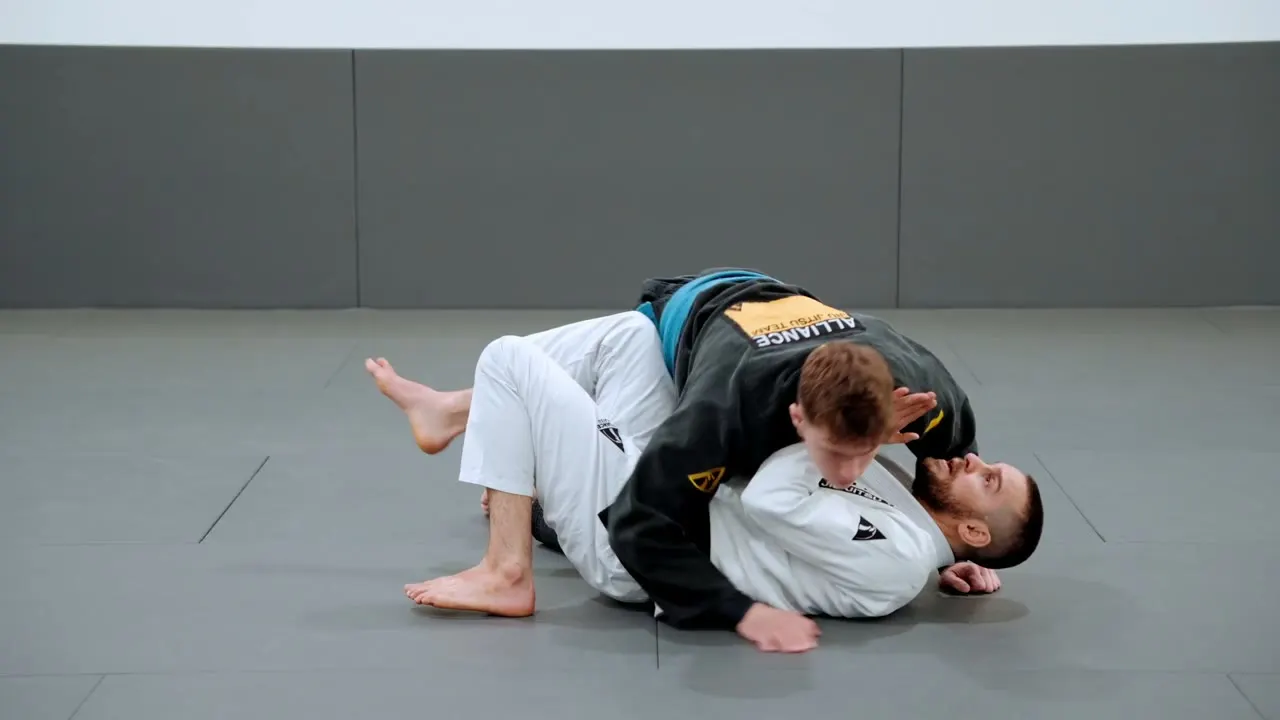
Escape side control by framing your arms, bridging, then hip escaping to bring a knee in and recover guard. Escape mount the same way when an arm trap isn’t on: close your elbows, bridge, slide a leg through one side at a time, then hip escape the last foot free. Both are drilled as a single combined movement, not two separate steps.
These are the two most-practiced escapes among JitsAI members: of 399 who had started a Foundation Focus, 42% picked escape side control and 12% picked escape mount.
How do you escape side control?
Never hug your opponent or let your arms get pinned flat: keep a frame between you. From there, a bridge and a hip escape work together, not on their own.
- Step 1: Frame up and keep your elbows in. Never let your arms get pinned flat or hug your opponent. Keep both forearms framed against their hip and chest, elbows tucked to your ribs, so there is always a gap to work with.
- Step 2: Bridge to make space. Post both feet on the floor and drive a big bridge up and to the side. A bridge alone will not get you out, but it opens the gap a hip escape needs.
- Step 3: Hip escape and bring your knee in. As you come down from the bridge, hip escape: slide your hips away and bring your top knee in next to your opponent’s knee. Your bottom foot goes into the space between their legs, foot only, not the whole shin, or you replace half guard instead of full guard.
- Step 4: Block the far knee and recover guard. Use your near leg to block their leg from following you round, bring your other knee in front of their hip, and finish the hip escape to close your guard.
How do you escape mount?
If you can trap an arm before your opponent posts it on the floor, a bridge alone can roll them off, as Henrique shows below. Most of the time you can’t, so the elbow escape underneath is the one to drill first.
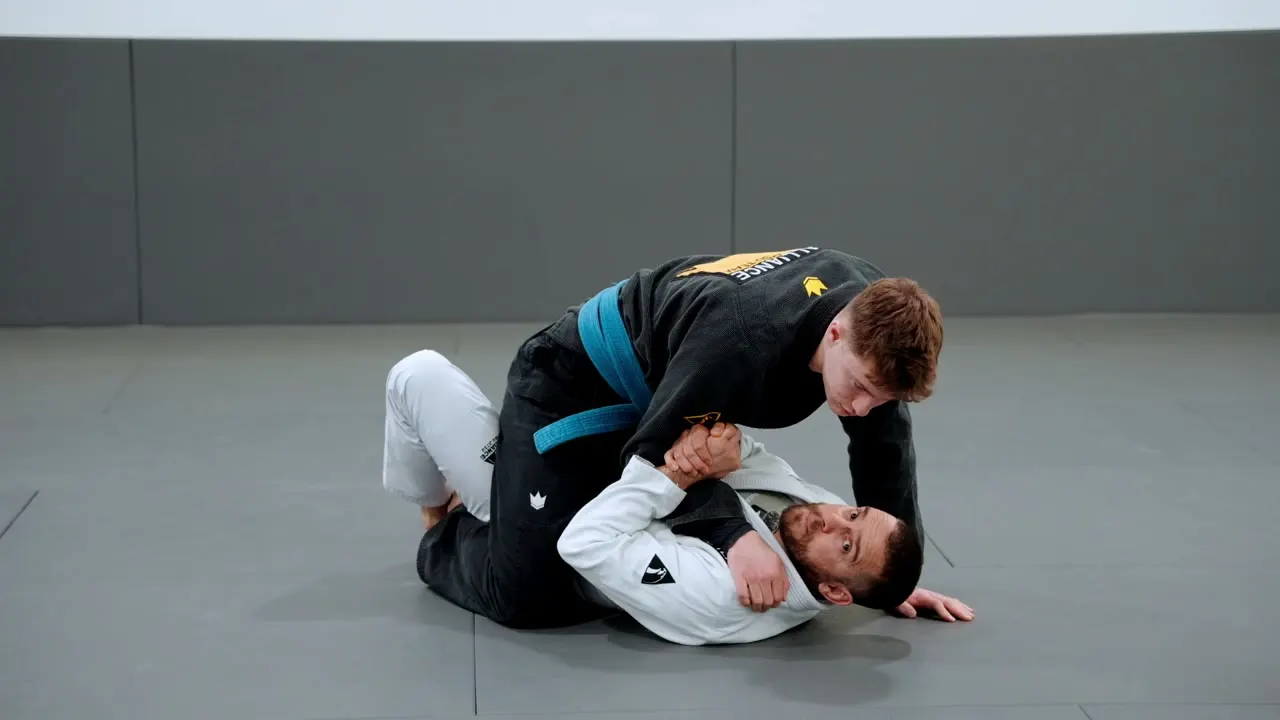
- Step 1: Close your elbows first. There is no elbow escape with open elbows. Keep both elbows tight to your body before you do anything else, or a heavier opponent gets an underhook and shuts the escape down.
- Step 2: Bridge, then push both hands into their leg. Bridge slightly to create room, then post both hands on your opponent’s same-side leg. Bridging first stops you leaving a gap under your armpit while you push.
- Step 3: Slide your leg through and trap it. Stretch your bottom leg underneath your opponent and slide it through, trapping their leg with your own as it comes free. That is one side escaped.
- Step 4: Block the biceps, bring your knee in, then hip escape the other foot. On the second side, push their knee with one hand and block their biceps with the other so they cannot cross-face you. Bring your knee in front of their hip, then hip escape to free your last foot and close guard.
Both escapes end the same way: a hip escape that lets you close your guard. Our BJJ for beginners guide puts side control and mount escapes as the first two weeks of a 12-week plan, for exactly this reason.
Why are these two escapes worth drilling first?
Beginners spend most rounds on the bottom, and side control and mount are where most of that time is spent. It shows up in the data: side control is the single most-picked Focus among 399 JitsAI members who had started one, more than any guard, sweep or submission. Mount is next among the escapes. See what other positions members practise for the full breakdown, and what is a Focus week for how the app tracks a Focus from a pick to proven.
Common mistakes with both escapes
- Bridging or hip escaping alone. A bridge without a hip escape rarely finishes the job, and a hip escape without a bridge first has no space to move into. Henrique’s course teaches them as one motion.
- Open elbows under mount. There is no elbow escape with your elbows open. Close them the instant someone mounts you, before you do anything else.
- Putting the whole leg between your opponent’s legs. On the side control escape, go in with your foot only. A full leg replaces half guard, not full guard, which puts you back in a worse spot.
- Stopping once you’ve created space. Space is not an escape. Finish the hip escape and get your knee or guard back in place before your opponent resets.
How do you know an escape is actually working?
Drilling an escape once doesn't mean it holds up against a bigger or more experienced partner. JitsAI tracks each Focus against a nine-level ladder, so you know exactly who it's proven on.
- One Focus a week, with pinned lessons from Henrique Rezende’s 74-lesson fundamentals course.
- A nine-level ladder for every technique, from partners less experienced than you to more experienced ones, each split lighter, same weight and heavier.
- Land it once and it’s a hit; 3 wins across 2 sessions and it’s proven.
$1 for 7 days, then $39 a year.
iPhone and Android.
Pick ONE thing One position for the week: an escape, a guard, a sweep.
Test it on everyone A quick check-in after class: who each round was against, and whether it worked.
Hit, then proven Land it once and it’s a HIT. Three across two sessions and it’s PROVEN.
Know what works See what holds up, against whom, then pick your next Focus.
Questions about escaping side control and mount
What is the first thing to do when escaping side control?
Frame your arms against your opponent’s hip and chest and keep your elbows tucked in. Never let your arms get pinned flat against your own body or wrapped around your opponent: without a frame, you have no space to bridge or hip escape into.
Why do beginners get stuck escaping side control?
Usually because they bridge or hip escape on their own, not together. A bridge alone rarely creates enough space, and a hip escape without a bridge first has nothing to escape into. Henrique’s fundamentals course teaches them as one combined movement: bridge, then hip escape.
What is the difference between the bridge and the elbow escape from mount?
The bridge escape traps an arm and rolls your opponent over your shoulder, so it only works if you can catch their arm before they post it on the floor. The elbow escape is the fallback when they’ve defended the arm: you close your elbows, push their leg and slide free one side at a time.
Why is side control the most practiced escape in JitsAI?
It is the position beginners land in most, and the one members choose to drill first: of 399 JitsAI members who had started a Focus week, 42% picked "Escape side control", more than any other Focus.
Is it bad to open your elbows when someone mounts you?
Yes. Open elbows give your opponent a clean underhook, which blocks the elbow escape before it starts. Keep your elbows closed to your ribs the moment someone mounts you, then bridge.
About the data
Training frequency and experience: self-reported answers from 3,316 adults (18 and over) who joined JitsAI between 16 October 2025 and 24 September 2026 and told us their belt at sign-up. Snapshot 25 Sep 2026. Full breakdown and a CSV on the BJJ belts page.
Focus picks: 399 members who had started at least one Focus in the app, same snapshot. A member can start more than one.
What we publish: totals only, groups of at least 50 people, and no share that rests on fewer than 10. Founder accounts are excluded and percentages are rounded. Most members found JitsAI through our ads, so this is a big sample but not a random one, and it leans towards people who want to improve and compete. The numbers describe patterns, not causes.